

The Home-Based Diagnostic Shield: How Lab Tests at Home Protect Neutropenic Oncology Patients

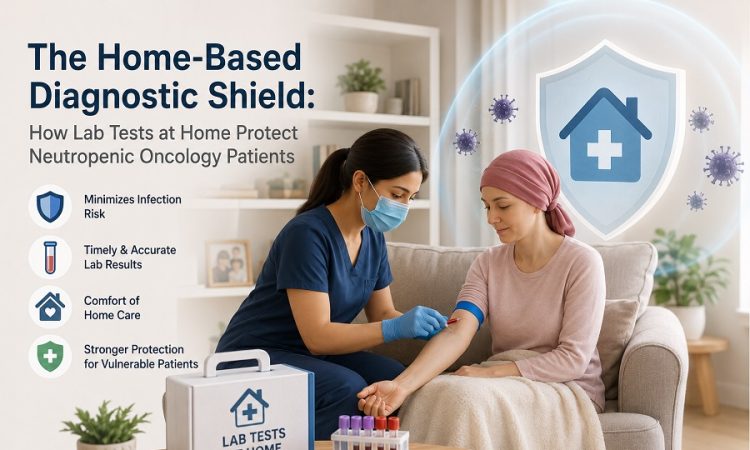
Cancer therapies like systemic chemotherapy are highly effective at destroying rapidly dividing malignant cells. However, they also inadvertently target healthy cells within the bone marrow, leading to a condition known as chemotherapy-induced myelosuppression. This frequently culminates in neutropenia—a severe drop in neutrophils, the white blood cells responsible for fighting off bacterial and viral infections.
For a neutropenic patient, a routine trip to a crowded hospital waiting room for standard blood work is a dangerous journey. In this context, utilizing a certified lab test at home service acts as a clinical shield, allowing the oncologist to extract critical diagnostic data while keeping the patient safely isolated in a controlled environment.
The Neutropenic Window: Why Immediate Data Matters
During a chemotherapy cycle, a patient’s blood counts typically drop to their lowest point—known as the nadir—usually between 7 to 14 days after treatment administration. During this window, even a minor bacterial or viral exposure can rapidly escalate into febrile neutropenia, a life-threatening medical emergency.
Critical Biomarkers Monitored from Home
To safely navigate this window, an oncologist requires frequent laboratory updates, all of which can be performed via mobile phlebotomy:
-
Complete Blood Count (CBC) with Differential: This measures the Absolute Neutrophil Count (ANC). If the ANC drops below $1,500, the patient is neutropenic; if it falls below $500, the risk of severe infection increases exponentially.
-
Comprehensive Metabolic Panel (CMP): Monitors renal and hepatic function (Creatinine, ALT, AST) to ensure the liver and kidneys are effectively clearing toxic chemotherapy metabolites.
-
Electrolyte Panels: Tracks potassium, magnesium, and sodium levels, which can fluctuate wildly due to treatment-induced nausea or dehydration.
By transitioning these tests to the home, the patient avoids exposure to nosocomial (hospital-acquired) pathogens like Pseudomonas aeruginosa or MRSA, which thrive in clinical communal spaces.
The Logistics of Home Phlebotomy for Immunosuppressed Patients
A home-based lab collection for an oncology patient cannot be treated like a standard wellness check. Leading clinical systems enforce strict protocols to ensure sample integrity and patient safety.
The Sterile Protocol Chain
-
Enhanced PPE: The visiting phlebotomist or home-health nurse dons medical-grade personal protective equipment (including N95 masks and sterile gloves) before entering the patient’s residence.
-
Aseptic Technique: Due to fragile veins (often secondary to repeated IV therapies or the presence of a PICC line/Port-a-Cath), the nurse uses advanced aseptic techniques to minimize tissue trauma and prevent line infections.
-
Cold-Chain Transport: The collected blood tubes are immediately placed in calibrated, temperature-controlled transport units. This stabilizes delicate cellular components, ensuring that when the sample arrives at the central laboratory, the results are factually flawless.
Preventing Treatment Delays: The Onco-Scheduler Benefit
In oncology, timing is everything. Chemotherapy regimens are calculated using precise cycles to allow healthy tissues to recover while preventing tumor regeneration. If a patient arrives at the hospital on injection day only to discover their white blood cell counts are too low, the cycle must be delayed, causing emotional distress and potentially compromising treatment efficacy.
By integrating a lab test at home 24 to 48 hours prior to the scheduled clinic visit, the workflow is completely optimized:
If the home labs reveal adequate counts, the patient walks directly into their treatment suite on chemo day, entirely bypassing the laboratory waiting areas and cutting down their total hospital exposure time by hours.
Traditional Hospital Labs vs. Integrated Home-Diagnostics
|
Metric |
Traditional Outpatient Lab Visit |
Certified At-Home Lab Diagnostics |
|
Infection Risk |
High (Exposure to public and clinical waiting areas) |
Negligible (Controlled home isolation) |
|
Physical Strain |
High (Travel, parking, navigating hospital wings) |
Zero (Conducted at bedside or sofa) |
|
Scheduling Control |
Dependent on clinic queues and transit times |
Prefixed, predictable home appointment window |
|
Turnaround Time |
Variable (Often requires waiting on-site for results) |
Rapid electronic sync to Oncologist’s portal |
Conclusion: Elevating the Standard of Cancer Care
The intersection of specialized oncology and home diagnostics represents a milestone in compassionate medicine. A cancer journey is physically and emotionally exhausting; reducing unnecessary medical travel is a powerful way to improve a patient’s overall quality of life.
By replacing stressful hospital laboratory visits with a highly controlled, sterile lab test at home, modern healthcare providers are doing more than just collecting blood. They are protecting fragile immune systems, eliminating logistical bottlenecks for the oncologist, and ensuring that the path toward cancer remission is as safe, smooth, and dignified as possible.

